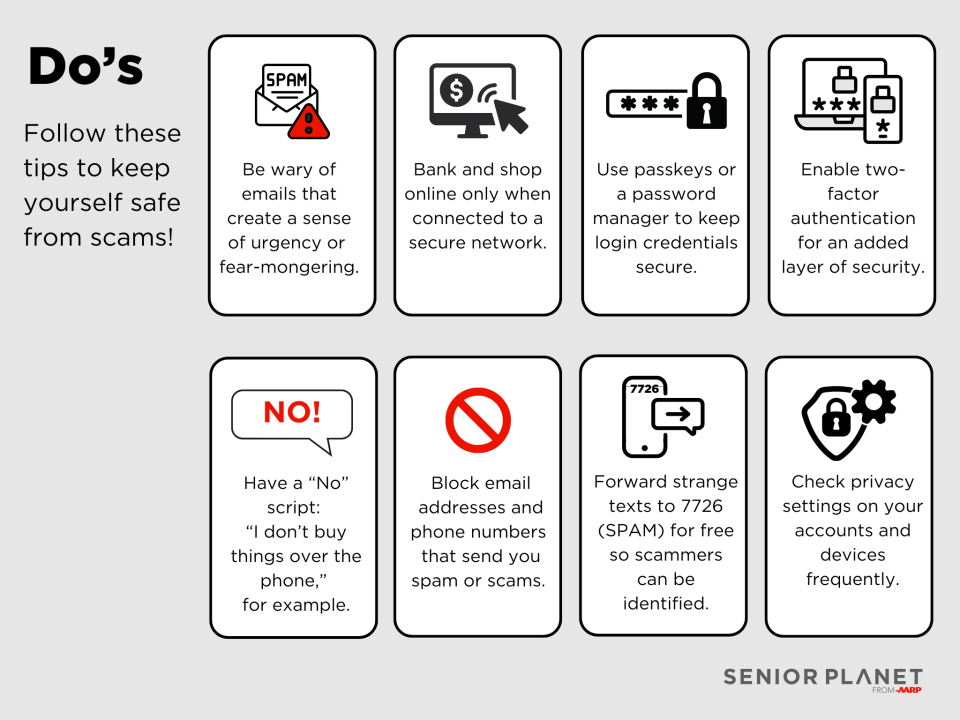
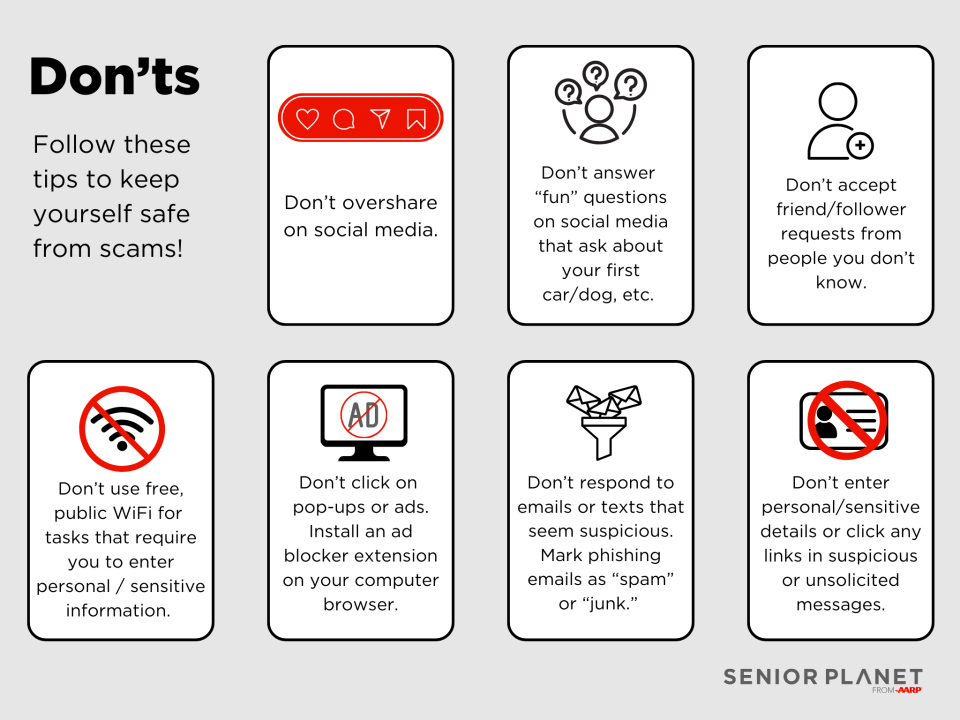
With online scams on the rise, it’s important to understand the different types of digital fraud and what to watch out for. Explore these resources to learn more and prepare yourself to stop scams before they start.
Online Classes · Is It a Scam? · Quiz · How to Stay Safe · Types of Scams · Articles · Resources





Romance Scams
Romance scams can target anyone, but older adults and socially isolated individuals are especially susceptible. These scams often start online or with a text message. It’s a long game, because the scammer wants to build trust.
Red Flags
- They don’t want to meet in person. They always have an excuse why they can’t meet in person.
- They mirror your experiences or oddly have a lot in common with you.
- They’re in need of money or they have an investment opportunity.
- They ask you to keep the relationship a secret.
Tips
- Do an online search for the person’s name. It’s a red flag if nothing comes up.
- Do an image search for any profile pictures they send you.
- Talk to friends and family about any new relationships.
- Be wary of people on dating sites who pressure you to move communications off the dating site.
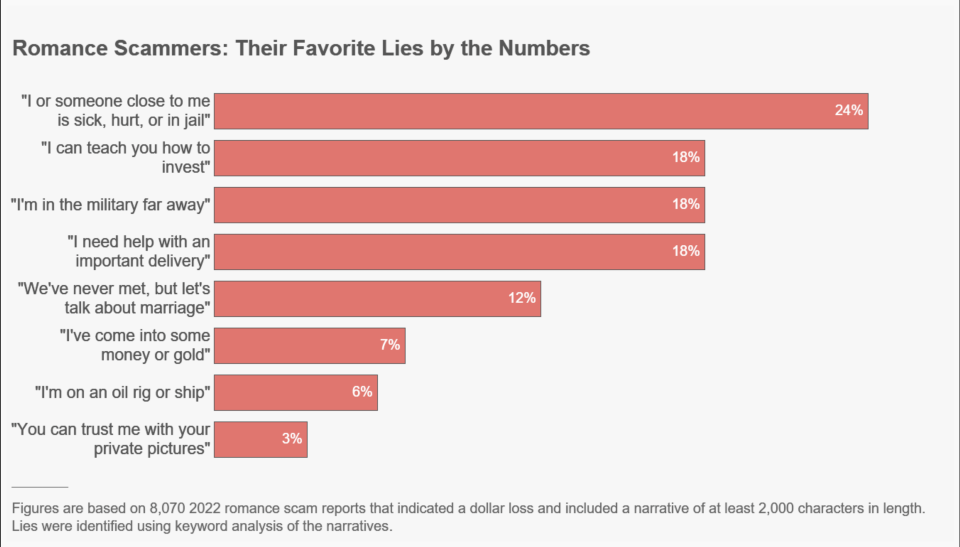
Image from ftc.gov
 Employment Scams
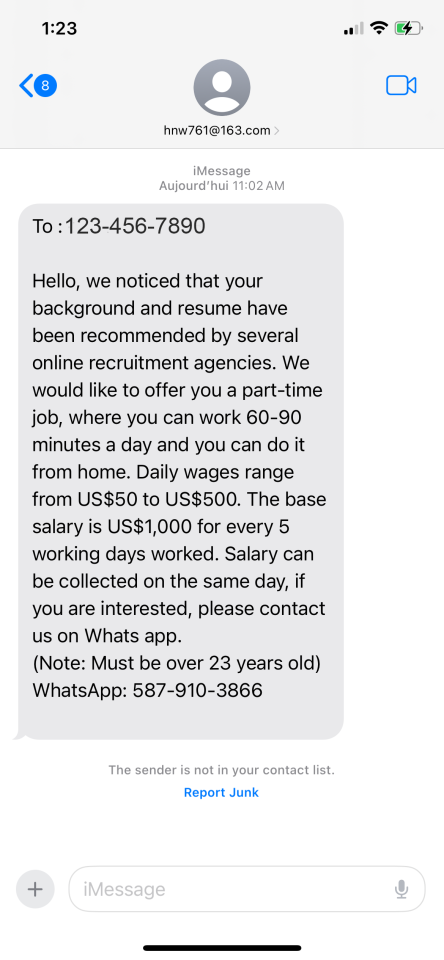
Employment scams target job seekers. These scams often place fake job descriptions online. Remember: if it sounds too good to be true, it probably is!
Red Flags
- Requests money from you.
- Asks to move communications from job site to a random app.
- Requests personal information like bank account, DOB, or SSN right away.
Tips
- Always do a search for the recruiter and company. If you suspect a scam, add the word “scam” after the company or recruiter that contacted you.
- Reach out to your network and ask for advice.
- Check free resources like the AARP Fraud Watch Network™.
Investment Scams
Investment scams can target anyone, but individuals who are less tech-savvy or uninformed about fintech may be more susceptible. These scams often involve cryptocurrency. Financial grooming, sometimes called “pig butchering” is an example.
Red Flags
- Often a long game. The scammer will try to earn your trust.
- It’s pitched as an exclusive opportunity.
- A sense of urgency – “act now or you’ll lose the opportunity”— is a telltale sign of a scam.
Tips
- If it sounds too good to be true, it probably is.
- Don’t accept friend requests on social media platforms from people you don’t know.
- Ignore random, but seemingly innocent text messages. Just delete them and / or report as junk.

IRS Scams
IRS scams can target anyone, but individuals who are socially isolated are at greater risk. Scammers will send texts, emails, and make phone calls saying that back taxes are owed. The IRS will send a first communication through the mail. You can always verify if the letter is legitimate by searching the number that appears on the top, right corner of the letter on IRS.gov. The IRS will only ever email, text, or call you if you’ve given them permission to do so and you’ve already been in touch with them about a case/issue.
Red Flags
- Threats to call law enforcement or immigration officials.
- Making contact over social media.
- Requesting payment in the form of gift cards or other pre-paid cards.
- Asking you to keep the case a secret.
Tips
- Ignore texts and social media requests that claim to be from the IRS.
- If you receive a phone call and you’re unsure if it’s legitimate, ask how to appeal the amount you allegedly owe. This is a process that the real IRS will allow.
- Do not pay any money if they promise you more money in return.

 Tech Support Scams
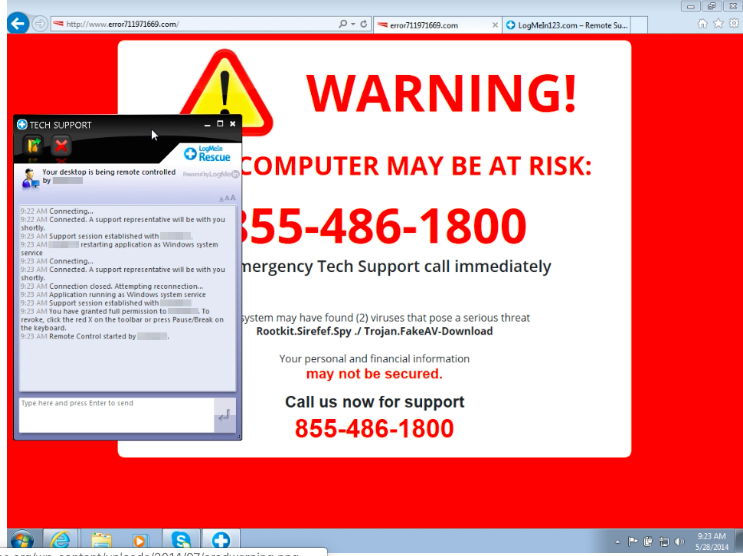
Tech support scams can target anyone, but older adults who aren’t tech-savvy are more susceptible to fall for these scams. Look out for these types of notifications:
- Pop-ups that you can’t close claiming that there is a virus on your computer.
- Random phone calls claiming that there is a virus on your device.
- Text messages claiming that your device is infected.
Red Flags
- Creates a sense of urgency, making you believe you’re at risk of losing files and money.
- Claims that the only way to resolve the problem is if they help you.
- Requests immediate payment.
Tips
- If you can’t close a pop-up because you can’t find the “x,” close your browser. If all else fails, shut down your computer and reboot.
- Get comfortable with your device. Know how to close tabs, apps, and shut it down and restart if necessary.
- Never call a number in a pop-up or unsolicited text or email that claims to be tech support.
- Never click on a link or download unknown software that claims to remove malware or viruses.
- Find competent help. Call a trusted friend or family member or the Senior Planet hotline: 888-713-3495
Celebrity Impostor Scams
Celebrity impostor scams can target anyone, but individuals who are socially isolated and/or not tech-savvy are at greater risk. There are two main types of impostor scams:
- Celebrity endorsement scams
- AI can produce realistic video and voice cloning, making it hard to know what’s real and what isn’t.
- Romance scams
Red Flags
- Someone claiming to be a celebrity makes contact with you on a dating site or social media.
- Requests for money.
- Requests to keep the relationship a secret.
Tips
- Before you buy a product based on a celebrity’s endorsement, be sure to research the product and the celebrity.
- If you believe you’ve been contacted by a celebrity, do an online search for images, recent projects, and updates. Compare what you find online to what they are telling you.
- Tell a friend or loved one what is happening.

The above conversation is entirely fictional and for educational purposes only.
 Threats and Extortion Scams
Threats and extortions can target anyone, but individuals who are less tech-savvy or socially isolated are more susceptible to fall for these scams. Scammers often send texts or emails that are threatening in nature. These messages can be scary, but are generally phishing expeditions. Scammers try to get you into a heightened emotional state so that you respond.
Red Flags
- The message claims to know where you are but doesn’t provide details.
- The sender claims to know information about you, but it’s all publicly available.
- The sender threatens to blackmail you.
Tips
- Keep your social media accounts private.
- Be careful about what details you share about your personal life on social media platforms.
- Do not engage with the sender. Take a screenshot and report it to the authorities.

Romance Scam Rundown
Romance scams aren't just for online dating anymore! Scammers are evolving their tricks to ensnare victims, so read our checklist before you hit 'send."
2025’s Top Scams
You're not imagining things - there really are more frauds and scams targeting older folks than ever before.
“¡Papá, AYUDA!” – Preocupante nueva estafa dirigida a personas mayores
Dentro de un secuestro virtual: un jubilado de 65 años respondió una llamada de un número desconocido y escuchó un grito: “¡Papá, necesito tu ayuda!”
“Dad, HELP!!!” – Terrifying New Scam Targets Elders
Inside a virtual kidnapping: a 65-year-old retiree answered a call from an unknown number—and heard a scream, "Dad, I need your help!"
Don’t Fall for a Travel Scam
While you're looking for arrangements for a nice trip during the holiday season, travel scammers are looking, too - for you.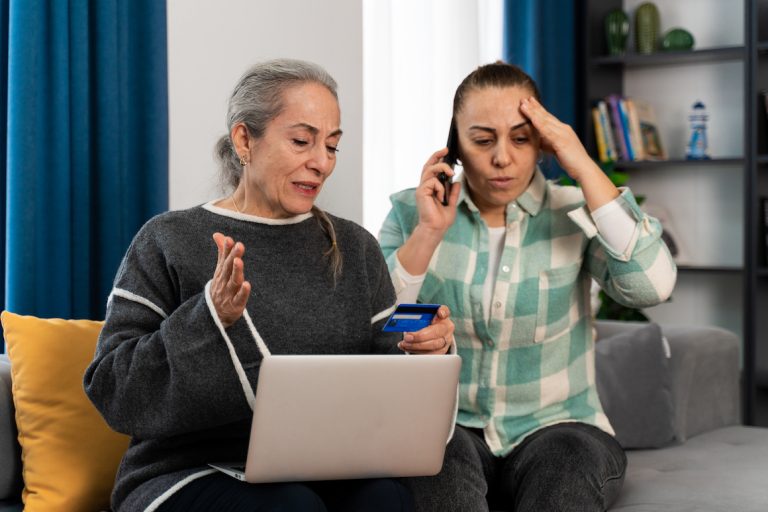
Los estafadores aumentan la focalización en personas mayores con una nueva herramienta
Los estafadores se dirigen más que nunca a las personas mayores... y han encontrado un nuevo y diabólico giro.Additional Resources for Scam Prevention
- AARP Fraud Watch Network
- Sign up for biweekly alerts on new scams and fraud
- AARP’s Fraud Resource Center
- Scamwatch.gov.au
- Scams to watch for in 2025
- Report fraud here: reportfraud.ftc.gov